
You came
here for
people.

Not AI slop.

Manthar is human-only social media for real people and human-made posts. We’re building it to bring you back to the people you wanted to hear from.

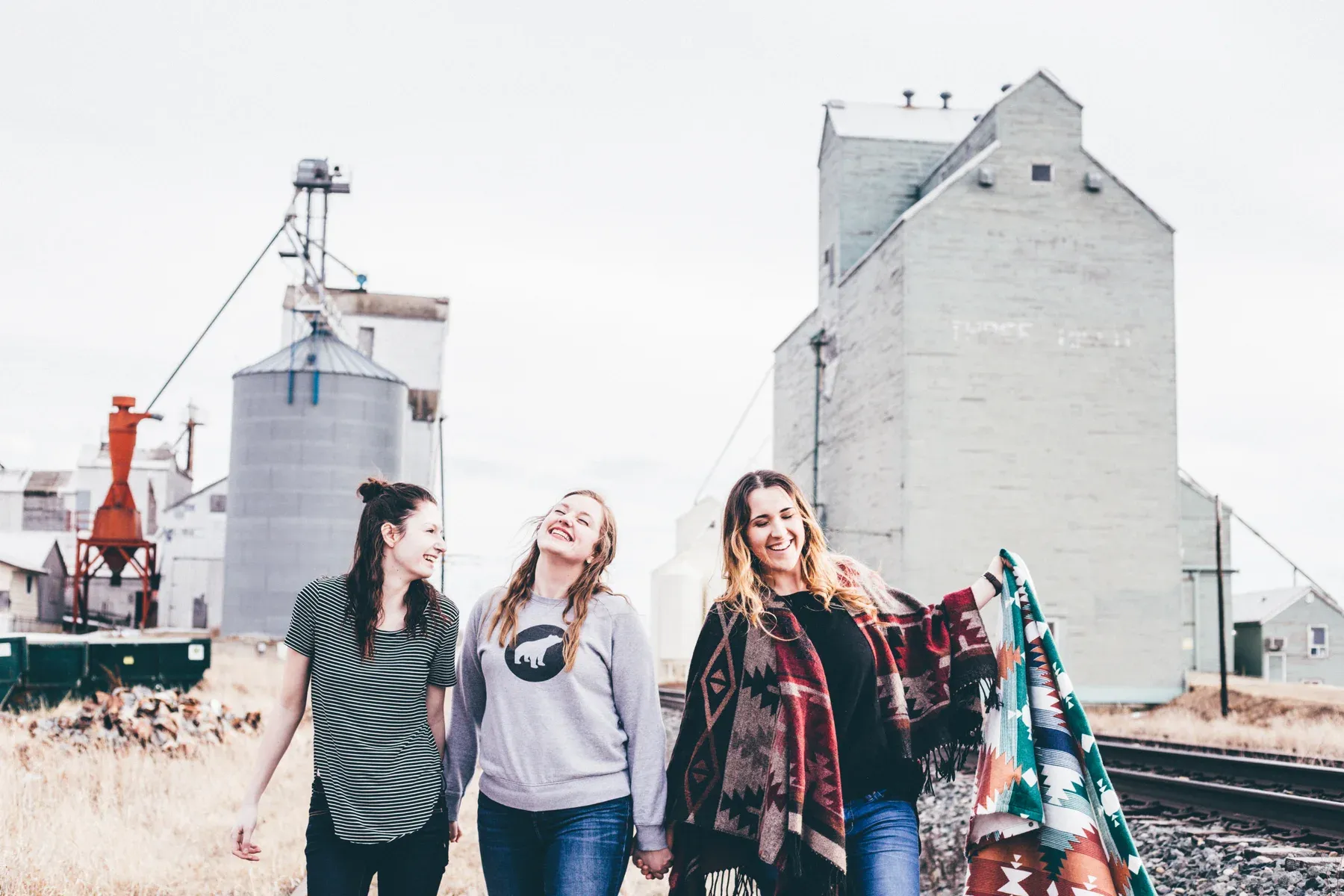
Three friends laughing outdoors, holding hands and a blanket.
Friends, being friends.Priscilla Du Preez · 2017
Your life is worth sharing.Take a look around

Why we're making Manthar

You shouldn't have to compete with a machine to be worth listening to.

Maybe you spent years learning to draw or play an instrument. Maybe you just opened your phone to see what your friends were doing, and got a feed full of AI slop and automated rage bait instead.

We want a place where sharing something still means a real person had something to share. Their thoughts, their photos, even a quiet, uneventful Sunday. That's the social app we're building.

This is happening
in real life.

Too much generated content

50%+

The volume keeps growing.

Deezer reported that detected AI-generated tracks exceeded half of new uploads on peak days in June 2026. That is one platform, but it shows how quickly generated work can arrive.

Uploads, not listening: Deezer says fully generated tracks account for 1–3% of streams. These are its own detection figures.

Read Deezer · 21 July 2026

Creators earning less

−9.4%

The work started paying less.

A peer-reviewed study of 92,457 freelancers found that after major image generators launched, image-related work brought in 9.4% less income and 3.7% fewer jobs. Writing freelancers saw earnings fall 5.2% after ChatGPT arrived.

One freelance marketplace, January 2022–April 2023. Exposure to AI tools is not proof that AI caused every lost job.

Read Organization Science · 24 September 2024

A harder start to working life

19%

Getting a start is getting harder.

Stanford’s August update found employment for 22–25-year-olds in highly AI-exposed jobs was about 19% below the level implied by keeping pace with less-exposed peers, using data through June 2026.

A relative employment gap in ADP payroll data, not proof that AI caused 19% job losses. The researchers do not find economy-wide displacement.

Read Stanford Digital Economy Lab · 12 August 2026

Children targeted by deepfakes

1.2M

A childhood photo can be turned into abuse.

UNICEF, with ECPAT International and INTERPOL, estimates at least 1.2 million children across 11 surveyed countries had their images manipulated into explicit deepfakes within a single year. In some countries, it was as many as 1 in 25 children.

Modeled from surveys of internet-using 12–17-year-olds in 11 countries, not a worldwide estimate. Manthar’s first release is 18+.

Read UNICEF · 4 February 2026

Your likeness, without permission

44%

A fake image can hurt a real person.

Common Sense Media reported that 44% of surveyed U.S. teens had seen AI-generated explicit imagery. The finding concerns exposure; it does not mean 44% were personally depicted.

1,314 U.S. teens aged 13–17, surveyed in fall 2025. Manthar’s first release remains 18+.

Read Common Sense Media · 21 July 2026

The web filling with generated text

35%

New pages are increasingly machine-written.

Pew Research Center analyzed 490,000 English web pages. About 10% showed signs of significant AI authorship. Among pages dated after ChatGPT’s release, the estimate rose to 35%.

Detector-based estimate on English Common Crawl pages. AI-assisted does not automatically mean low quality.

Read Pew Research Center · 20 August 2026

Content farms at industrial scale

3,749

Slop is now a business model.

NewsGuard has identified 3,749 sites publishing AI-generated news and information with little or no human oversight, operating across 16 languages.

An analyst-identified catalog under NewsGuard’s criteria, not a census of the web.

Read NewsGuard · 23 June 2026

Bots outnumber people

53%

You share the web with more machines than people.

Thales Imperva’s 2026 report found automated systems generated more than 53% of web traffic in 2025, up from 51% the year before. Human traffic was 47%.

Traffic across applications Imperva protects, not the whole internet. Includes benign bots; it is not a measure of “AI content.”

Read Thales Imperva · 28 April 2026

AI training on AI

80%

The machine is starting to eat itself.

Research published in Nature showed that models degrade when repeatedly trained on their own generated output. Epoch AI estimates an 80% probability that the public supply of human-written text is fully consumed for training between 2026 and 2032.

The Nature result covers specific recursive-training experiments, not all synthetic data use. The Epoch figure is a model-based forecast of public text consumption.

Read Nature & Epoch AI · 2024

Judgment outsourced, not trained

−15.3%

Help that leaves when the help stops.

In a month-long MIT Media Lab experiment, AI chat improved how well people spotted misinformation by 21% while they used it. By week four, their accuracy without it was 15.3% below where they had started.

67 participants on a four-week news task. Evidence about skill transfer, not about brains being damaged.

Read MIT Media Lab / ACM CHI · 14 April 2026

Music

24%

A quarter of music creators' revenue is projected at risk.

A study commissioned by CISAC, the international confederation of authors' societies, projects that generative AI puts 24% of music creators' revenue at risk by 2028, about four billion euros in losses that year alone.

A projection commissioned by a creators' rights body against a no-generative-AI scenario, not an observed loss.

Read CISAC / PMP Strategy

Entertainment

118,500

Film, TV and animation jobs could be consolidated by 2026.

In a CVL Economics survey of 300 entertainment leaders for The Animation Guild, respondents estimated that about 21.4% of film, television and animation jobs, roughly 118,500 roles, could be consolidated, replaced or eliminated by 2026.

A survey of executive expectations commissioned by industry unions, not an observed employment count.

Read CVL Economics · January 2024
What these findings do, and do not, tell us

These reports cover different people, platforms and periods. Publication dates and measurement periods are shown separately. They are evidence of specific problems, not a survey of demand for Manthar or proof that our protections work.

Several figures (Deezer, Pew, Imperva) come from detection systems or protected-network telemetry; classifier estimates are not ground truth, and vendor-reported figures serve the vendor's market. Where a number is industry-self-reported rather than independent, we say so beside it.

The FBI's April 2026 release also reports 22,364 AI-related complaints and roughly $893 million in reported losses during 2025. That is a complaint total, not a count of all AI harm.

Read the FBI report

A different choice

Social media does not have
to feel like a race.

Manthar keeps the familiar parts of a social app and changes the decisions that made people feel replaceable, suspicious, or unable to stop.

What became normalWhat Manthar chooses
A feed shaped to keep you scrollingChronological posts from people you chose
Accounts operated at machine speedOne person remains responsible for the account
Generated volume competing with lived experienceFully generated submissions stay outside the rules
Recommendation rules you cannot inspectA public algorithm you can question and challenge
A page designed never to endA natural stopping point, so you can leave

These are Manthar’s product commitments. They are not claims about any named company.

A place to
be yourself.

Familiar ways to share and find your people, with a few decisions we care about.

The account belongs to a real person.

A real person comes first. Every account is tied to a real person and their devices. Running an account through an automated bot or AI agent is prohibited.

How access works

The moments and work are genuinely yours.

Share your life, your thoughts, and your hobbies. You can use creative digital tools to assist your work, but fully generated submissions are prohibited.

Read our community rules

You can question the algorithm.

See people you follow in simple chronological time order. Read our recommendation rules in plain language and propose improvements.

See the public algorithm

You get to be done scrolling.

We design calm pages that end, without autoplay, endless loops, or addictive notifications. Catch up with your friends and get back to living.

How we design for your time
Waves washing over rocks on the coast.
Jakub Gorajek · 2016

You can just
like the sea.

You can share a photo because you like it. You can spend a weekend making something nobody asked for. You don't owe the internet a more productive version of yourself.

We'd like social media to feel that way again.

A few things
to know.

What is Manthar?

Manthar is human-only social media being built for real people and human-made posts. Automated accounts and fully generated submissions are prohibited, while people may use AI tools to assist work that is genuinely their own.

When can I join Manthar?

Accounts are not open yet. We are admitting founding users from the waitlist as verification and support are ready. Manthar is an Android app: there is no browser version of the social network, and this website stays for public information. We have not announced a launch date.

Can I use AI tools in my own work?

Yes. AI assistance is allowed when the underlying work, photo, or thought is yours. Fully generated submissions are prohibited. Adding a filter or caption to a generated image does not change that. Every post carries its Proof of Origin & Effort record, and reporting a post that looks generated sends it to review.

How will you keep bots and agents out?

Our approach combines identity verification, device-backed authentication, and active abuse monitoring. No platform can guarantee zero bad actors, so we publish our protections and limits transparently.

Is Manthar for creators, or can anyone join?

It's for everyday social life. You don't need an audience, a brand, or a portfolio. Whether you're sharing a walk in the park or catching up with family, you belong here.

Will you use my posts to train generative AI?

Never. Our commitment is never to use your posts or photos to train commercial generative models. Your personal life is not training data.

There's still
room for you.

Explore the idea on the web today. The Android app, and accounts inside it, are still in development.

Get notified for mobile launch

Be the first to know when the Android app is ready. No marketing spam, ever.